



Business owners often come to us at KelyanMedia with the same pain: "We have a great product, we've invested millions in a beautiful website, but there are no sales because we don't have the people." This is where a difficult but necessary conversation begins about how internet marketing really works.
Over 15 years in SEO and digital marketing, I've seen empires built on fraud collapse and local brands grow by embracing a long-term quality strategy. Today, neural networks, artificial intelligence (AI), and behavioral factors dictate the rules of the game. The classic "insert keywords into the text and buy links" no longer works. Google has gotten smarter, users have become more demanding, and the cost per click in paid advertising is reaching historic highs.
In this article, we'll take a detailed look at all the current methods for attracting high-quality, targeted traffic to your website, cutting through the noise and fluff. We'll discuss how businesses can survive and grow in the era of AI search, how to build a technical foundation for your website, and which channels will deliver the highest ROI (return on investment) in your niche.
Search Engine Optimization (SEO) in the Age of AI: The Foundation of Your Business
SEO (Search Engine Optimization) isn't magic or voodoo. It's engineering. It's the process of aligning your website perfectly with what search engines consider the "best answer to a user's query." The introduction of Search Generative Experience (SGE)—Google's AI-powered generative search results—has shifted the focus. Now, the search engine often provides the user with the answer above the search results. To get traffic to your website, you must provide value that AI can't generate.
Technical Resource Health: Crawl Budget and Core Web Vitals
Think of a search engine crawler as an inspector coming to inspect your store. If the doors are jammed, the lights are out, and the navigation is confusing, the inspector will turn around and leave. In SEO, this is called wasted crawl budget.
- Speed and Core Web Vitals: Google officially uses page speed as a ranking factor. Three metrics are important:
- LCP (Largest Contentful Paint) — the rendering time of the largest element on the first screen. Should be less than 2.5 seconds.
- FID/INP (Interaction to Next Paint) — the site's response time to a user's action (click, swipe).
- CLS (Cumulative Layout Shift) — layout stability. Elements should not "jump" when the page loads.
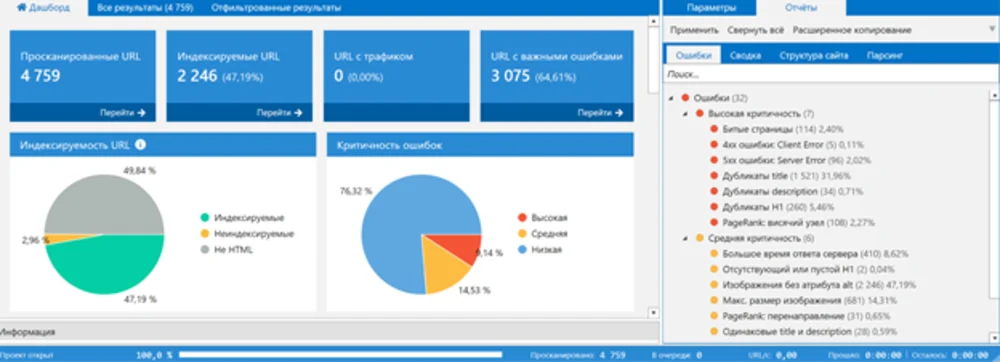
- Indexing and technical audits: Regularly scan your site with specialized software (such as Netpeak Spider). Your goal is to find and eliminate 404 errors, circular redirects, duplicate pages, and empty tags. If you have an online store with 10,000 products, and half of them return duplicates, search engines will simply stop crawling you.
- Mobile-First Indexing: This rule has been in place for a long time, but many people still ignore it. Google evaluates only The mobile version of your website. If the text on a smartphone is small, the buttons are too close together, and pop-ups obscure the content, you won't rank high.
Semantic core and intents: What is your client thinking?
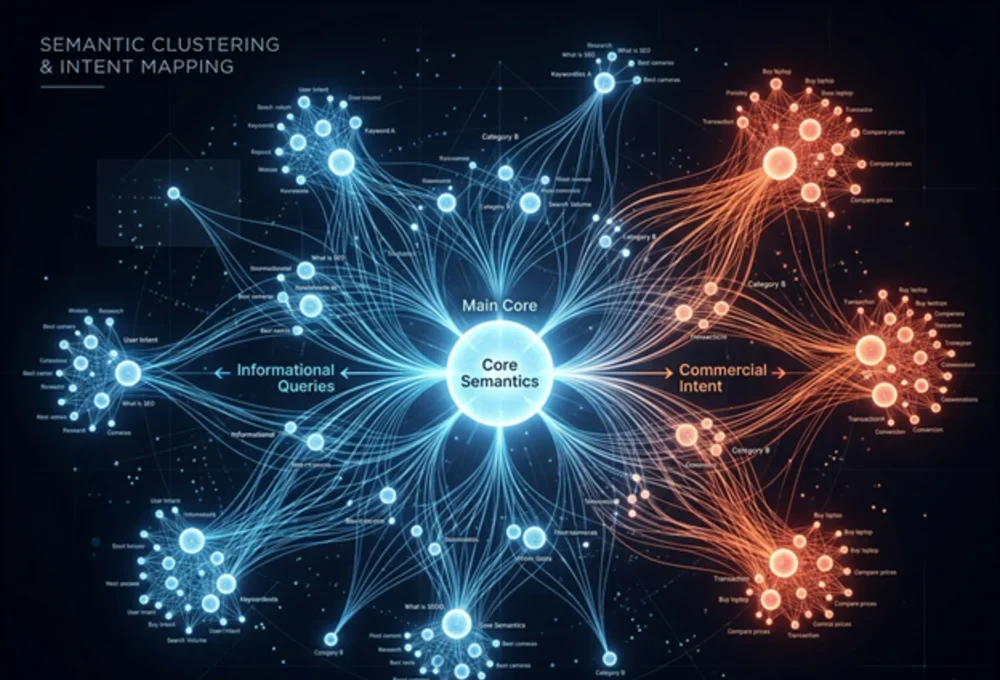
Keyword research is about collecting data on market needs. But simply downloading queries isn't enough. It's important to understand intent (intention) of the user.
- Information intent: «"How to choose a hair clipper." People aren't ready to buy; they're looking for advice. This is where blog posts come in.
- Commercial intent: «"Buy barbershop equipment price." People are ready to spend money. They need to be led to a catalog page or a specific product.
- Local intent: «"Barber shop nearby" or "auto glass replacement center." Highest demand.
How to work with semantics at an expert level:
Instead of manually sorting thousands of keywords, use professional tools. First, collect as many keywords as possible using parsers or databases, and then perform rigorous clustering. Programs like KeyAssort allow you to group queries based on actual search results (SERPs). If a search engine shows the same websites for two different queries, these queries should lead to the same page on your website. This prevents traffic cannibalization.
To analyze the market, be sure to use competitive intelligence (for example, Serpstat). Enter the domains of your three main competitors and see which keywords they're using to drive traffic that you're not. This is your growth area.
EEAT Content and Factors
The abbreviation EEAT stands for Experience, Expertise, Authoritativeness, Trustworthiness (Experience, Expertise, Authority, Credibility). These rules are applied especially strictly to websites in the YMYL (Your Money or Your Life) category—finance, medicine, and law. But today, EEAT affects all businesses.
- Experience: You must prove you have actual experience with the product. Writing about auto glass replacement? Include before/after photos from your workshop, take pictures of the technician at work, and describe the nuances of the specific brand of adhesive you use.
- Expertise: Content shouldn't be written by a nameless copywriter. Articles should be signed by your company's relevant specialists, with their credentials and social media links.
- LSI and Text Analytics: The text should be rich in semantic (LSI) words that create context. Use content analytics tools (such as Surfer SEO) that analyze your top 10 competitors and suggest which terms, subheadings, and structure to use to make your content the most relevant.
Local SEO: A Powerful Magnet for Offline Businesses
If your business is tied to a specific geographic location—whether it's a beauty salon, dentist, service station, or retail store—local search (Local SEO) will become your primary and cheapest source of hot traffic.
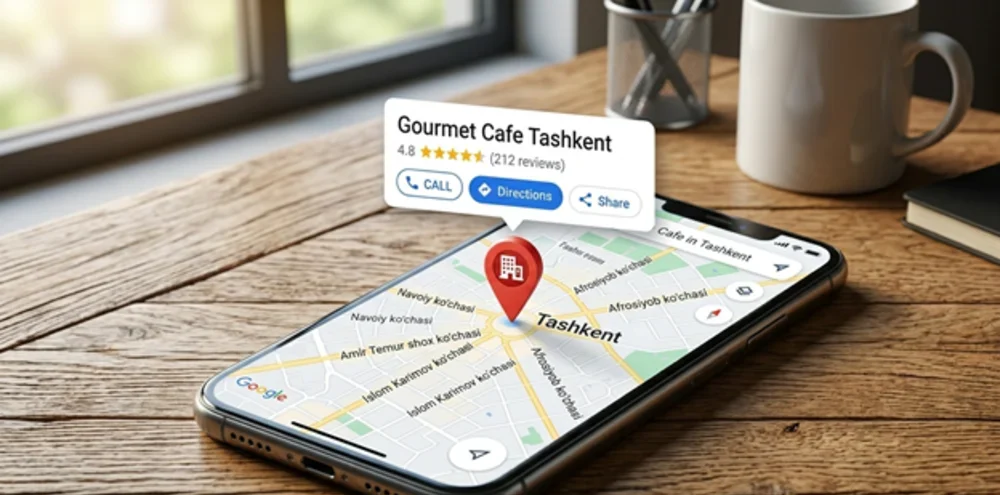
When a user searches for a service on a mobile phone, Google first shows them a "Local Pack" (a block with a map and three nearby businesses). Being among these three guarantees a continuous flow of calls.
Optimizing Google Business Profiles
This is your digital storefront. Your Google My Business profile must be set to 110%.
- Data Accuracy (NAP): Your Name, Address, and Phone Number must be absolutely identical on your website, Google Maps, social media, and all city directories. Even the slightest discrepancy reduces search engine trust.
- Business categories: Select one main category (e.g. "Hairdresser") and add relevant additional ones ("Men's Barber Shop", "Barber Shop").
- Visual content: Regularly upload high-quality photos. Include the building's façade (to make you easy to find), interior, photos of your team at work, and photos of your products. Profiles with more than 100 photos receive 500% more clicks and 1000% more directions.
Reputation Management (SERM)
Reviews are the #1 ranking factor in local search.
- Proactive feedback collection: Don't wait for customers to write reviews (people usually only do this when they're dissatisfied). Implement a motivational system: offer a discount on their next visit, a free coffee, or simply send an SMS reminder with a direct link to your Google profile after the service is completed.
- Working with negativity: Every bad review should be followed by a polite, constructive response from management offering a solution. Your future clients will read this, assessing your credibility.
- Keywords in reviews: Google analyzes the text of reviews. If customers often write "excellent window tinting»" or "the best fade in the city" - your profile will rank higher for these specific queries.
Paid traffic (Contextual and Targeted advertising)
SEO and content marketing are investments in the future. They will begin to yield powerful results after 4-6 months of diligent work. If you need sales tomorrow morning, paid traffic (performance marketing) comes into play.
Google Ads: Reaching Hot Demand
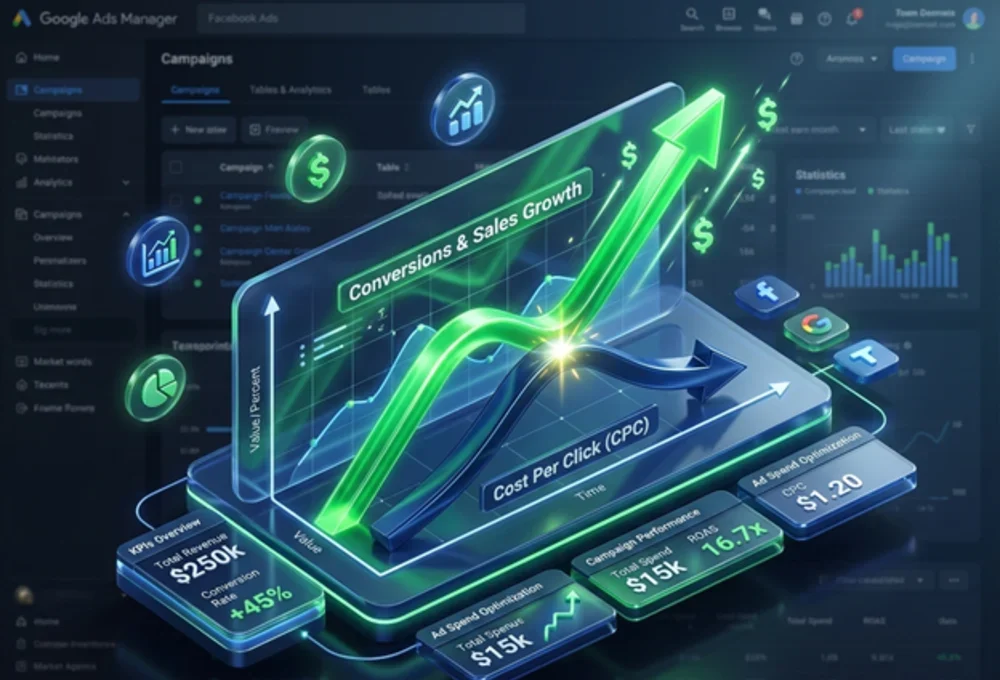
With contextual advertising, you pay per click (PPC). A user searches for a product, sees your ad, and then goes to your website.
- Search campaigns: Relevance is critical here. If someone searches for "buy red Nike sneakers in size 42," the ad should contain exactly that text, and the link should lead not to the store's main page, but directly to the product page for the specific sneakers in the desired size.
- Performance Max (PMax): The main trend of recent years is campaigns completely managed by Google's neural networks. You don't manually set bids or select platforms. You provide the algorithm with your budget, headline text, images, videos, and your current customer base. Then, the artificial intelligence tests thousands of combinations and displays ads on Search, YouTube, Gmail, and partner sites, finding the people most likely to convert.
- Remarketing: Over 951,000,000 people leave a website without making a purchase on their first visit. Remarketing allows you to reach these users with banners on other websites, reminding them of their abandoned cart or offering a personalized discount.
Targeted advertising on social networks (SMM)
Unlike Google, where we work with already formed demand (the person entered the request themselves), in social networks (Instagram, Facebook, LinkedIn) we generate demand ourselves by showing ads to cold or warm audiences based on their interests and behavior.
- Lead Magnet Strategy: Selling complex B2B services or expensive products head-on on social media is very difficult. Offer the user a trade: useful, free material (a checklist, instructions, a cost estimate, a free audit) in exchange for their email address or phone number. Once you've received their contact information, you can begin to warm up the prospect through emails or sales team outreach.
- Lookalike Audience (LAL): You upload a database of your best clients' phone numbers to your advertising account. The algorithm analyzes their profiles and finds millions of other people who are most similar to your customers in behavior, interests, and income level. This is one of the most effective tools for scaling traffic.
Content Marketing, Outreach, and Alternative Sources
Relying solely on Google Ads and SEO puts your business in a vulnerable position. Any algorithm change or ad account blocking could halt sales. Diversification is the key to stability.
External content marketing and PR
To get people to search for your brand name, you need to establish yourself beyond your website.
- Guest Posts (Outreach): Write powerful, expert-based articles and submit them to major industry portals, media outlets, and popular blogs. In exchange, you'll receive a link to your website. This accomplishes two things: it generates direct referral traffic from portal readers and shows Google that authoritative resources link to you (increasing link equity for SEO).
- Maintaining profile columns: If you're in finance, start a column on a relevant financial website. If you're in IT, publish on Habr or similar platforms. Share case studies: talk about your failures and how you overcame them. Sincerity sells better than advertising slogans.
Video Marketing (YouTube)
YouTube is the second most popular search engine in the world. People are increasingly looking for answers in videos rather than text.
- How-to video: Film instructions. If you sell building materials, demonstrate how to mix the mixture correctly. Optimize your video titles, descriptions, and tags for search queries. Links in the video descriptions generate excellent, engaged traffic to your website.
- YouTube Shorts: Short vertical videos are currently enjoying huge organic reach. They're a great way to quickly increase brand awareness and redirect viewers to your main channel or website.
Aggregators and marketplaces
In some niches (real estate, cars, and product marketplaces), search results are densely populated by giant aggregators. Fighting them is pointless. They need to be leveraged.
List your products or services on marketplaces and specialized service portals (e.g., freelance search services or platforms for beauty professionals). Even if the transaction occurs within the platform, this increases brand awareness, and some customers will eventually switch to your direct website for repeat orders.
Analytics and Automation: Controlling Chaos
Attracting traffic is only half the battle. If you don't measure results, you're wasting money.
The Foundation of Web Analytics
Your website must have the following basic tools configured:
- Google Analytics 4 (GA4): A modern analytics standard, GA4 focuses on events, not just page views. You need to know exactly how many people clicked the "Call" button, how many downloaded a price list, how many added an item to their cart but didn't complete the purchase.
- Google Search Console: Your website's dashboard as Google sees it. Here you can see which specific search phrases people use to find you, your rankings, the click-through rate (CTR) of your search snippets, and whether there are any critical mobile layout or indexing errors.

End-to-end analytics and cohort analysis
For a serious business, basic analytics aren't enough. If you have a long transaction cycle (for example, selling real estate or complex B2B software), a client might click on an ad in January, read a blog in February, subscribe to social media in March, and only sign a contract in May.
- End-to-end analytics (integration of your website, advertising accounts, telephony, and CRM system) allows you to track this entire journey. You'll know for sure that $10,000 invested in a blog post in January generated $10,000 in net profit in May. This allows you to make management decisions based on solid data (data-driven approach).
- Automation of SEO processes: Monitoring rankings in competitive niches requires specialized API solutions. Large projects often use solutions like XMLRiver for parsing search results to capture hundreds of thousands of rankings daily and quickly respond to competitors' actions or search engine algorithm updates.
Summary from the KelyanMedia team
Let's summarize. Effective website traffic generation in 2026 cannot be built on a single tool or "secret trick." It requires systematic, collaborative work by the entire team: from developers and SEO specialists to content creators and analysts.
Your checklist for scaling your project:
- Conduct a deep technical audit. Make your website fast, responsive, and search engine friendly.
- Collect a complete semantic core and distribute it based on user intent.
- Write expert content. Improve your EEAT factors. Show search engines that your website is a real business with real experts.
- Capture local search results via Google Business Profile if you have a physical address.
- Launch Performance Marketing (Google Ads) to generate sales "here and now".
- Implement end-to-end analytics, so that every cent invested in marketing is transparent and measurable.
A website is more than just an online business card; it's your main digital asset, a profit-generating machine. KelyanMedia We know how to get this machine running at full speed. We don't sell "search engine rankings" or "clicks"; we build comprehensive digital growth strategies focused on your business's bottom line.
If you're ready to move from chaotic attempts to find clients to predictable scaling, it's time to start systematically working. Your competitors are already doing this.
Published by the KelyanMedia team of experts. We know things about Google that others are only just beginning to guess.